Louver Windows for Tropical Villas: When They're the Right Call (and When They're Not)
Louver windows move up to 86% free airflow — more than any other window type — but they're weak on security and storms. A room-by-room guide for villa owners in hot, humid climates.
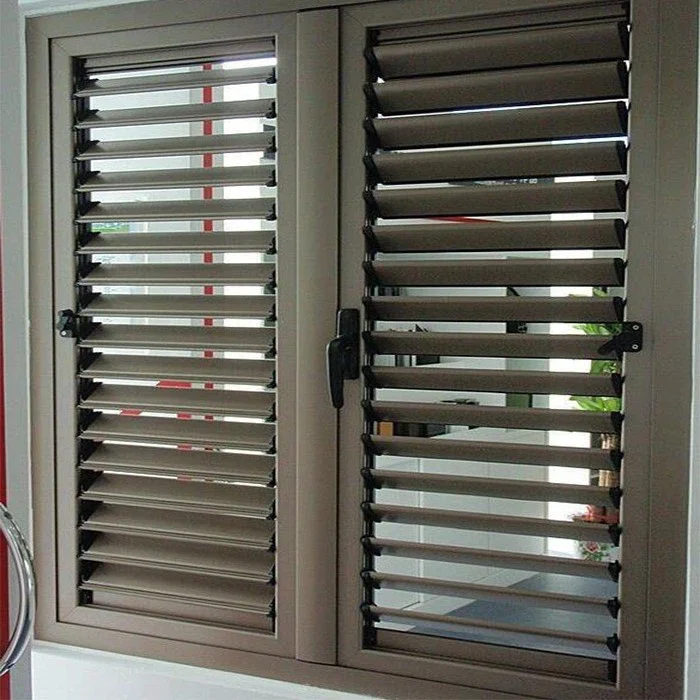
When are louver windows the right choice for a villa in a hot, humid climate — and when should you choose something else?
Louver windows are the right call when ventilation is the priority: fully open, they pass up to 86% free airflow — several times more than sliding or awning windows — and blade angles let you aim the breeze while shedding rain. They're the wrong call where you need security, airtightness for air conditioning, acoustic insulation, or storm ratings. In practice, tropical villas work best with louvers in ventilation zones (bathrooms, kitchens, stairwells, verandas) and casement or sliding windows in bedrooms and living areas.
Up to 86% free airflow fully open — several times a sliding window
Ventilation continues in light rain thanks to blade angles
Not for security-critical, air-conditioned, or storm-rated openings
Best used in ventilation zones: bathrooms, kitchens, stairwells, verandas
Quick Comparison
| Topic | Louver windows | Casement windows |
|---|---|---|
| Ventilation | Up to ~86% free airflow; blades aim the breeze | Good — full sash opens, but sash area limits flow |
| Ventilating in rain | Yes — angled blades shed light rain while open | No — open sash lets rain in |
| Security | Weakest point: individual blades are the attack surface | Strong: hook locks and multi-point locking, PAS 24-class options |
| Airtightness / AC efficiency | Poor-to-moderate — many blade joints leak air | Strong — compression seals suit air-conditioned rooms |
| Acoustics | Weak — blade gaps transmit street noise | Good with laminated glass and sealed frames |
| Cleaning & maintenance | Blades cleaned individually; more moving parts | Simple: two surfaces, few moving parts |
What louvers do better than any other window
A louver window is a stack of horizontal blades that pivot together on a single operator. Fully open, the entire frame becomes an air passage — premium systems measure up to 86% free airflow, and even standard units move several times the air of a sliding window of the same size, where half the frame is always closed.
Control is the second advantage. Blade angles adjust airflow volume and direction — open fully for a flush of morning air, or crack them a few degrees to vent heat without a draft on the bed. Angled blades also shed light rain while staying open, which is precisely the condition tropical climates serve for months at a time: warm, humid, drizzling.
For villa owners trying to cut air-conditioning hours, this matters directly: tropical design guides consistently point to cross-ventilation and high-low openings as the cheapest cooling strategy, and louvers are the most controllable tool for both.
Where louvers shine in a villa, room by room
The strongest louver placements are the spaces that want constant air exchange rather than sealed comfort:
- Bathrooms and toilets — permanent steam extraction without leaving a sash open to rain; frosted blades keep privacy
- Kitchens — heat and cooking smells exhaust immediately, at counter height where they're generated
- Stairwells and corridors — stack-effect chimneys: low louvers pull cool air in, high louvers push hot air out
- Verandas, breezeways, and laundry rooms — semi-outdoor zones that want maximum airflow with rain protection
- Walk-in closets and storage — preventing the musty buildup humid climates guarantee
The honest trade-offs
Louvers give you airflow by giving up sealing, and that trade has three edges. Security: each blade is a potential entry point — standard louvers are the easiest window type to defeat, while casements with hook locks and multi-point locking are among the hardest. If ground-floor security matters, louvers need security bars, blade locks, or a rethink.
Air conditioning: dozens of blade joints leak air even when closed, so louvers in an AC-cooled bedroom quietly tax the compressor all night. Acoustics: the same gaps carry street noise — measured studies of glass louvers quantify exactly this ventilation-versus-quiet trade-off. And maintenance: each blade is a surface to dust and a pivot to keep smooth, where a casement has two flat panes and a handle.
Storms and cyclones: the reality check
Standard louver windows are not storm products. In hurricane- and cyclone-rated zones — Florida, the Caribbean, coastal Queensland — openings typically need impact-rated, tested assemblies, and a rack of pivoting blades is structurally the hardest format to make comply.
The exception proves the rule: premium engineered louver systems have passed debris-impact cyclone testing and are installed in Category 5 cyclone shelters in Queensland. But that's purpose-built, certified hardware at a matching price — not the standard louver unit. The practical rule for storm-belt villas: rated casement or fixed windows on exposed elevations, louvers on sheltered faces and interior ventilation zones.
Specifying the right louver for your villa
Once louvers make the shortlist, four choices decide whether they perform:
- Blade material — glass preserves daylight and views; aluminum blades maximize security and shade; timber suits heritage styles. Frosted or tinted glass solves bathroom privacy without blocking air
- Frame — powder-coated aluminum resists humid salt air far better than steel; in coastal zones specify marine-grade coating
- Operator and hardware — a smooth, lockable operator is the difference between a louver you adjust daily and one you abandon; check blade end-caps and pivot quality
- Insect screens — non-negotiable in mosquito regions; specify frame-integrated screens so blades and screen don't fight each other
Putting it together: the mixed-elevation villa
The villas that work best in hot climates don't pick one window type — they zone them. Louvers in the wet rooms, kitchen, stairwell, and veranda keep the house breathing; casements with compression seals handle the air-conditioned bedrooms; sliding or bifold doors open the living area to the terrace.
If you're planning a build or renovation, our aluminum louver windows are made to order with glass or aluminum blades, frosted options, and integrated flyscreens — and our projects team can suggest a room-by-room window schedule for your climate.
FAQ
Do louver windows let rain in?
Open at a normal angle, blades shed light rain while continuing to ventilate — that's their signature advantage in tropical climates. In heavy wind-driven rain you should close them; closed louvers resist weather moderately well but never match a compression-sealed casement.
Are louver windows secure?
Standard louvers are the weakest common window type for security — individual blades are the attack surface. For ground-floor or security-critical openings, either add security bars or lockable blade hardware, or choose casement windows with multi-point locking.
Are louver windows energy efficient?
It depends on the cooling strategy. In a naturally ventilated house, louvers are the most efficient option — free airflow replaces AC hours. In an air-conditioned room, blade-joint air leakage makes them one of the least efficient; use sealed window types there.
Can I use louver windows in a hurricane or cyclone zone?
Standard louvers: no. Certified premium louver systems with debris-impact ratings exist and are used in Category 5 cyclone shelters, but they are engineered, priced accordingly, and must be specified deliberately. On exposed storm-belt elevations, impact-rated casement or fixed windows are the default.
How do I keep mosquitoes out with louver windows?
Specify frame-integrated insect screens designed for the louver system — the screen sits behind the blades and both operate independently. Aftermarket screens retrofitted to louvers tend to rattle and leak gaps, so it's worth ordering them built-in from the factory.
Related Insights
August 17, 2026
Window Grills for Tropical Homes: Security, Airflow, and Designs That Don't Look Like a Jail
Aluminum window grills keep a home secure with the windows wide open — if you pick the right type, spacing, and material. Fixed vs removable vs security mesh, design patterns, and the fire-egress rule most buyers miss.

April 13, 2026
Tinted Glass vs Low-E for Hot-Climate Projects
Tinted glass cuts glare and changes appearance, while Low-E is usually the stronger tool when the real problem is solar heat gain and facade-side comfort.