Window Grills for Tropical Homes: Security, Airflow, and Designs That Don't Look Like a Jail
Aluminum window grills keep a home secure with the windows wide open — if you pick the right type, spacing, and material. Fixed vs removable vs security mesh, design patterns, and the fire-egress rule most buyers miss.
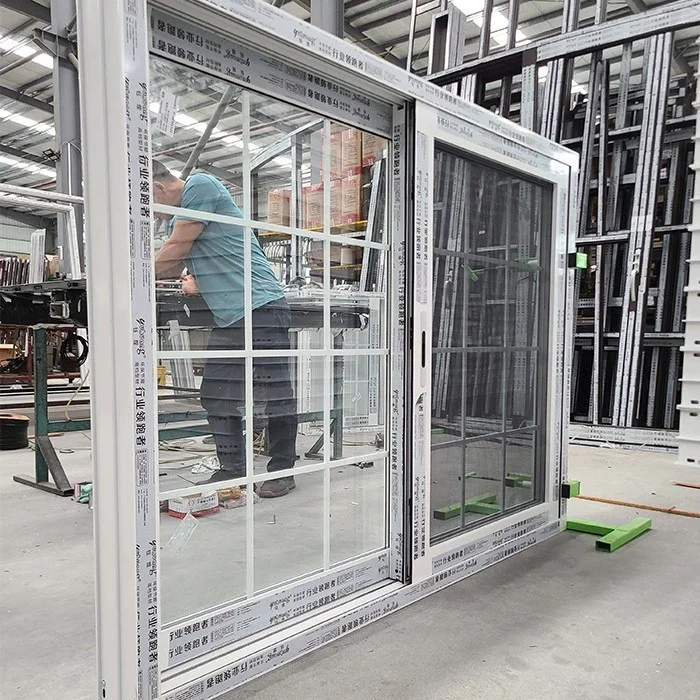
How do you choose window grills for a home in a hot climate — balancing security, ventilation, fire escape, and looks?
In tropical regions, grills exist to make open windows safe: a well-specified aluminum grill keeps roughly 70% airflow while blocking entry. The critical choices: type (fixed is cheapest but a fire hazard — every bedroom needs at least one hinged or removable panel), bar spacing (100mm maximum where children live), material (powder-coated aluminum won't rust in humid or coastal air, unlike iron), and whether security mesh suits you better (openable from inside, insect screen built in). Design is flexible — slim horizontal bars, geometric grids, or lattice patterns all work without the prison look.
Aluminum grills keep ~70% airflow while securing open windows
Never fixed-only on bedrooms — every room needs an escape panel
Bar spacing ≤100mm where children live
Powder-coated aluminum won't rust where iron will
Quick Comparison
| Topic | Conventional aluminum grill | Security mesh |
|---|---|---|
| Security | Strong physical barrier; add rod cores for anti-cut | Impact-resistant stainless mesh; knife-resistant weave |
| Emergency escape | Only if hinged/removable panels are specified | Opens from inside by design |
| Insect protection | No — needs a separate mosquito screen | Built in — the mesh is the screen |
| View and light | Bars visible; design patterns soften it | Nearly invisible from inside |
| Cost | Lower upfront | Higher upfront, combines two functions |
Why grills are standard in tropical homes
In hot climates, windows stay open — for the night breeze, for cross-ventilation, for drying the humidity out of the house. An open window is also an open door for intruders, which is why window grills are near-universal across Southeast Asia, Africa, and the Middle East: they let a home breathe while staying defensible.
The goal, then, isn't just 'a barrier.' A good grill secures the opening while keeping the airflow you opened the window for — a well-spaced aluminum grill passes roughly 70% of the air — and without turning the facade into a cage.
Fixed, removable, hinged, or sliding: the type matters more than the pattern
Fixed grills — welded or bolted permanently — are the cheapest and strongest, and a documented fire hazard: Malaysian fire-safety commentary repeatedly warns that fully grilled bedrooms become traps. Removable grills use tamper-proof fixings that release from inside, cost about 20–30% more, and double as a cleaning convenience. Hinged panels swing open like a gate — the best emergency egress — and sliding (collapsible) grills fold aside entirely, at the highest price.
The rule of thumb used by responsible installers: every bedroom gets at least one hinged or removable panel, no exceptions. Grills sealed between double-glazed panes are a different product entirely — zero maintenance, but decorative only, with no security value.
Designs that don't look like a jail
Current design directions have moved well past the vertical-bar cage. Slim horizontal bars read as modern lines and barely interrupt the view. Geometric grids — diamonds, hexagons, squares — give a deliberate architectural rhythm. Laser-cut aluminum lattice (jali-inspired) suits heritage and resort-style villas while adding shade and glare control. For high-rise apartments, 'invisible grills' — tensioned stainless wires — preserve the view entirely, though they protect against falls more than intrusion.
- Slim horizontal bars — the modern default, minimal sightline obstruction
- Geometric grids — diamond/hexagon/square patterns with balanced airflow
- Laser-cut lattice — heritage patterns, plus shade and privacy
- Invisible wire grills — high-rise fall protection with a clear view
Material: why aluminum wins in humid and coastal air
Wrought iron and mild steel are strong but rust — and in monsoon humidity or coastal salt air, rust begins at the weld points within a few years, staining sills and weakening joints. Galvanized or stainless steel resists better but costs more and weighs more. Powder-coated or anodized aluminum is rust-proof by nature, light on the window frame, and repaint-free; matte black and anthracite are the current finish trends.
Where aluminum gives ground is raw strength — which is why the standard upgrade for ground-floor windows is a threaded steel rod core inside the aluminum profile, roughly tripling cut resistance while keeping the rust-proof exterior.
Security and safety details that actually matter
A grill's real-world performance lives in its details, not its pattern:
- Bar spacing ≤100mm wherever children live — the fall-prevention norm for high-rise homes
- Rod-core reinforcement (8–10mm threaded steel inside the profile) for ground-floor anti-cut strength
- Tamper-proof fixings — security bolts that can't be backed out from outside
- Profile spec: 12–25mm grill profiles at 1.2–2.0mm wall thickness are the common residential range
- Egress first: one hinged or removable panel per bedroom, keyed alike with the rest of the house
Grill or security mesh?
Security mesh — woven stainless steel in a rigid frame — has become the main alternative in Malaysia and the region: it resists impact and cutting, opens from inside by design (solving the fire-egress problem), and doubles as the insect screen, all while nearly disappearing from the interior view.
It costs more upfront than a conventional grill and changes the look of the facade from the street. The honest answer for most tropical homes: grills where you want visible deterrence and pattern, mesh where you want the clean look and built-in mosquito protection — and many projects mix both by floor and elevation. If mosquitoes are the daily battle, note that a grill alone does nothing; pair it with a dedicated insect screen, or choose mesh.
FAQ
Are fixed window grills a fire hazard?
Yes, if they're the only barrier type on a bedroom. Fully fixed grills block emergency escape — a recurring warning in Malaysian and regional fire-safety guidance. Every bedroom should have at least one hinged or removable panel that opens from inside without special tools.
What bar spacing is safe for children?
Keep bar spacing at 100mm (about 4 inches) or less in any home with children — this is the widely used fall-prevention norm for windows and balustrades, especially in high-rise apartments.
Will aluminum grills rust near the sea?
No — aluminum is rust-proof by nature. Specify powder-coated or anodized finishes (marine-grade coating in direct coastal exposure). It's iron and mild steel grills that rust at the welds in humid or coastal air.
Do window grills stop mosquitoes?
No — grills stop intruders, not insects. Pair them with a dedicated mosquito screen (ideally frame-integrated), or choose security mesh, which is the insect screen and the barrier in one product.
What affects the price of window grills?
Type (sliding > hinged > removable > fixed), material and finish, pattern complexity (laser-cut lattice costs more than straight bars), rod-core reinforcement, and window count. Aluminum grills are among the most economical security upgrades per window — request a quote with your window schedule for exact pricing.
Related Insights
August 17, 2026
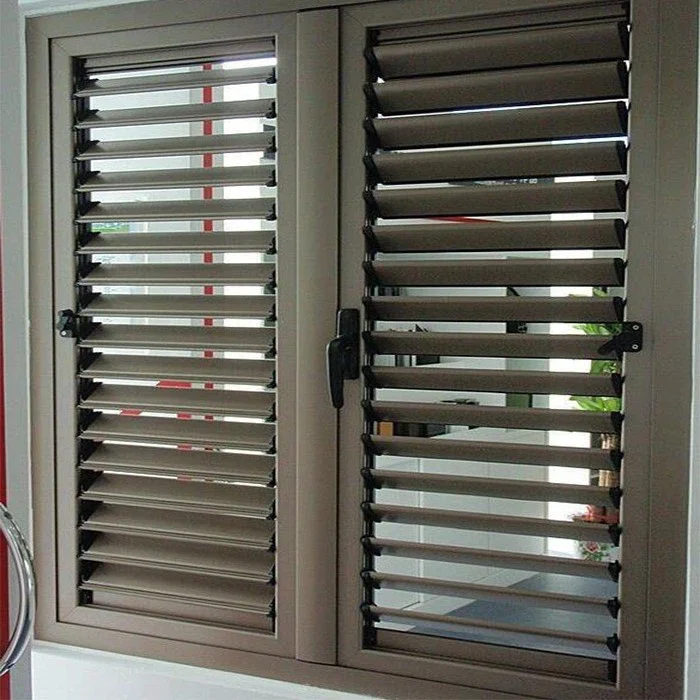
Louver Windows for Tropical Villas: When They're the Right Call (and When They're Not)
Louver windows move up to 86% free airflow — more than any other window type — but they're weak on security and storms. A room-by-room guide for villa owners in hot, humid climates.
April 13, 2026
Tinted Glass vs Low-E for Hot-Climate Projects
Tinted glass cuts glare and changes appearance, while Low-E is usually the stronger tool when the real problem is solar heat gain and facade-side comfort.